
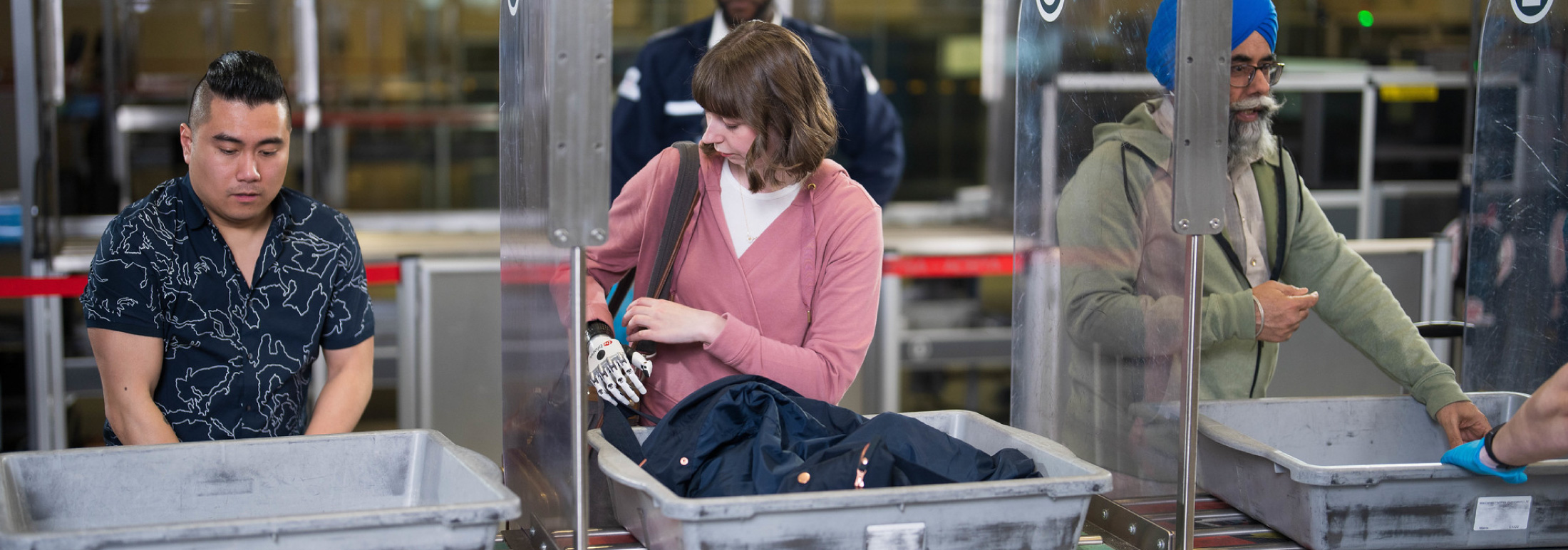
Airport security screening is an important part of air travel. It helps keep people and flights safe. Before entering the secure area, passengers, their carry-on items and non-passengers are screened.
Some steps may feel routine, while others may be less familiar, especially if you are asked to take an extra step at the checkpoint. Knowing why these steps happen can help you prepare for the process and make them easier to follow. Let’s break it down for you.
Start with your boarding pass and choose your screening line
When you arrive at the checkpoint, choose the appropriate screening line that applies to you. Depending on the airport, this may include a regular screening line, a Family and Accessible screening line for passengers who may need more time or support, or a dedicated Verified Traveller line for eligible passengers with Verified Traveller status. You will then show your boarding pass so it can be scanned.
Next, place your carry-on bag and personal items in a bin so they can be screened using X-ray equipment. If something cannot go through the X-ray, let a screening officer know.
Screening officers will guide you through the process, so listen for their instructions as you move through the checkpoint.
The tools used to support security screening
Once your items are in a bin, you will be screened too. This may involve going through a metal detector, standing in a full body scanner, or using other screening tools such as explosive trace detection or a hand-held metal detector.
Before being screened, remove items from your pockets to help reduce the chance of an alarm. Coins, your cellphone or keys will need to go in your carry-on bag or in a bin.
Your carry-on bag will be screened using X-ray equipment. At some checkpoints, this may include Computed Tomography (CT) X-ray technology.
At CT-equipped checkpoints, large electronics, medical devices, and permitted liquids, aerosols and gels of 100 mL or less can stay inside your carry-on bag during screening. If CT is not available, you will need to remove these items from your carry-on and place them in a bin.
When screening needs to go one step further (additional screening)
Screening equipment may identify something that needs further attention before screening can be completed. It could be something on you, like jewellery or footwear that sets off an alarm, or something in your carry-on bag that needs a closer look. It does not always mean something is non-permitted, but it does mean screening officers need to check it.
What happens next depends on what needs to be checked. Screening officers may open your bag, use swab testing or conduct a physical search. If a physical search is required, you can ask to have it done in a private area. Screening officers will explain what they are doing, and all alarms must be resolved before you or your carry-on is permitted into the secure area.
Random screening is also part of the process
Sometimes, passengers are selected for additional screening on a random basis. This is different from additional screening that happens when something requires further attention during the regular screening process.
Random additional screening is a legislated requirement in Canada. It helps maintain strong security standards by adding unpredictability to the process and supporting impartial selection. If you are selected, screening officers will explain what happens next and guide you through the steps.
Before you go
Before you pack, take a moment to check what you can bring, what needs to go in checked baggage and what limits may apply. CATSA’s What Can I Bring? tool can help you find the rules for common travel items so you can arrive at the checkpoint prepared.