
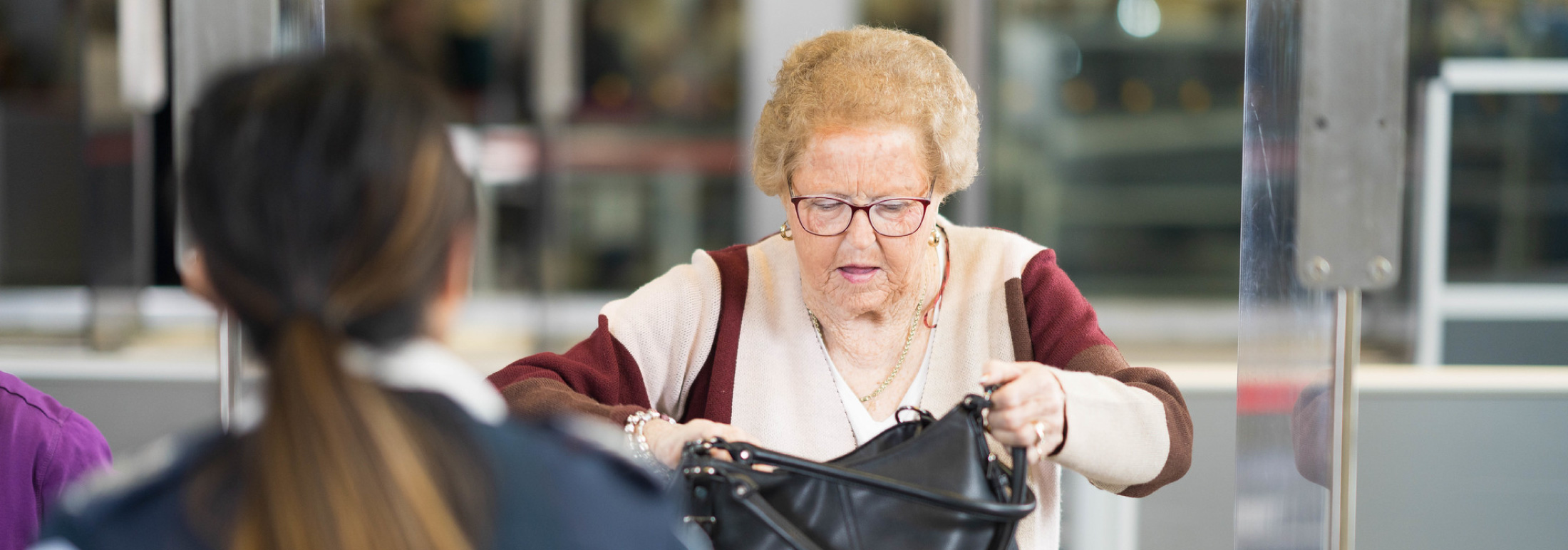
Your trip is booked. Now comes the packing – and perhaps a few questions about airport security screening. Can your medication go in your carry-on? What happens if you use a mobility aid such as a cane, walker, wheelchair or mobility scooter? Where can you get help if you need it?
Whether you’re heading somewhere warm or visiting family, here’s what to know before you zip your luggage.
Need extra time or assistance at security?
No matter which line you use, let a screening officer know if you need more time, guidance or assistance with your bags. They can help you through the screening process and answer questions along the way.
Where available, you can also use the Family and Accessible Line. This dedicated screening line is designed to provide a more comfortable and supportive experience.
You may also see facilitators wearing blue “Need Help” vests. They can guide you through the process, answer questions or help communicate your needs to screening officers.
Need someone who isn’t travelling with you to accompany you through security? Contact your airline in advance. They’ll need authorization from the airline and must go through security screening too.
Packing medication? Here’s what can go in your carry-on
If you need to travel with medication, keep it in mind when packing for your flight. Prescription and essential non-prescription medications, including eye drops and inhalers, can go through airport security. A day-by-day pill organizer is allowed too.
Prescription and essential non-prescription liquids, aerosols, and gels (LAGs) medications are exempt from the usual 100 mL restriction and don’t need to fit in your 1L LAGs bag.
These items will still need to undergo security screening, so present them to the screening officer for inspection.
Keep your medication in your carry-on, somewhere easy to reach for screening. CATSA recommends keeping liquid, aerosol, and gel prescription medication in its original container with a pharmacy label to help identify it.
Travelling with a cane, walker, wheelchair or mobility scooter?
Your mobility aid can go through security. Let the screening officer know what assistance you need before screening begins.
Whenever possible, your mobility aid will be screened with you. If it needs to be screened separately, it will be returned promptly, and you can ask for a chair if you prefer to sit while you wait.
If you cannot walk through the full body scanner unassisted, other screening methods are available. A screening officer can explain these options.
Bringing a CPAP machine – or have a medical implant?
Travelling with a medical device? What screening looks like will depend on the device and your needs. Let the screening officer know about your device before screening begins so they can explain the process and the available screening options.
Packing a CPAP machine? It is permitted through security, and the distilled water used for it is exempt from liquid restrictions. Keep the machine accessible and follow the screening officer’s directions about whether it needs to come out of its case. If it needs to be removed, the tubes and mask can stay in the case while the main unit goes in a bin.
Have a pacemaker, hip or knee replacement, or another medical implant? Let the screening officer know before screening begins so they can discuss your screening options and the process with you. The same applies if you wear an insulin pump or continuous glucose monitor. If a physical search is needed, you can ask for a private search area.
Packing toiletries? A quick liquids refresher
If warmer weather is on the itinerary, chances are that sunscreen, aloe and other liquids, aerosols and gels (LAGs) are coming too.
Before they go in your carry-on, double-check their size.
Permitted LAGs in carry-on are subject to a 100 mL limit, meaning they must all be in containers of 100 mL or less and fit into one clear, resealable 1L plastic bag.
Drinks follow the same 100 mL rule in carry-on, so empty any drinks before security. You can bring an empty reusable water bottle and fill it after security screening if you wish.
Packing powders? They have their own limit
Not everything in your luggage fits into the LAGs or solid category. Powders and granular items have their own set of rules.
Items containing more than 350 mL of inorganic powder or granular material, such as glass beads, poly-pellets, sand or pebbles, cannot be brought in your carry-on. Some powder and granular items may also need additional screening and, depending on the results, may not be permitted in carry-on baggage.
Expert tip: Think the size of a pop can.
Ready to fly
Medication packed? Passport and boarding pass ready? Almost there.
Before you zip your luggage, use CATSA’s What Can I Bring? tool to double-check specific items. You can also visit our dedicated seniors section for more tips on preparing for security screening, or the accessibility and medica needs section for information about travelling with medical devices or accessibility needs.
These tips cover security screening in Canada. If you’re travelling internationally, remember that security screening and customs are separate parts of your journey. Before travelling with food, check the requirements for your destination, as well as the requirements for bringing food back into Canada.
Then you can turn your attention to the part you’ve been looking forward to: where you’re headed next.