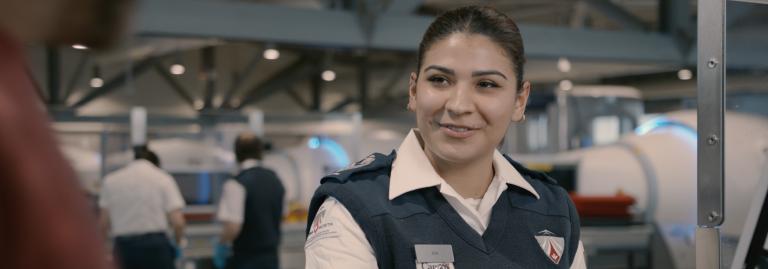
It’s early morning at the airport. You place your belongings in a bin and follow the instructions from a screening officer – a familiar part of air travel. But security screening is much more than that. Behind every step is a process designed to protect you and support the secure, efficient movement of people and goods across Canada’s air transportation network.
Understanding even a little about why the security screening process works the way it does can help you feel more prepared and confident the next time you travel.
Our Mandate
The Canadian Air Transport Security Authority (CATSA) is responsible for securing critical elements of Canada’s air transportation system. This includes screening travellers, their carry-on, checked baggage, as well as non-passengers and their belongings.
While security screening is the part of our work most visible to travellers, much of what supports effective screening happens behind the scenes.
From managing screening operations at airports across the country to introducing new technologies and innovations, CATSA’s work is fundamental to the security of the air travel system.
How CATSA delivers security screening
CATSA’s role extends beyond the checkpoint. To deliver security screening, CATSA works with screening contractors, airports, airlines, government partners, local police and law enforcement to support an effective screening system. Together, these efforts help support aviation security throughout Canada’s air transportation network.
Evolving with the aviation industry
Security is CATSA’s core mandate, but supporting an efficient screening experience is also important. As passenger volumes fluctuate throughout the year, CATSA continues to support both security and efficiency.
As Canada’s aviation industry evolves, CATSA continues to modernize its operations to optimize security screening. This includes investing in advanced screening technologies and strengthening screening capabilities, while supporting Canada’s national security framework.
Innovations like CT (Computed Tomography) X-ray technology and customized screening lines for space-limited airports help enhance screening capabilities while supporting both security effectiveness and efficiency.
CT technology provides screening officers with detailed three-dimensional images of carry-on baggage, meaning large electronics, medical devices and permitted liquids, aerosols and gels of less than 100 mL each can remain in carry-on bags during screening.
Knowing what CATSA does
The next time you travel, you’ll see that security screening is just one part of a broader system working to help protect Canada’s aviation network. By understanding CATSA’s role, travellers can gain a better understanding of how airport security functions and why it’s important to Canada’s national security.
Effective security screening helps support Canada’s aviation network, enabling the movement of millions of travellers and the connectivity that people and groups across the country rely on.