
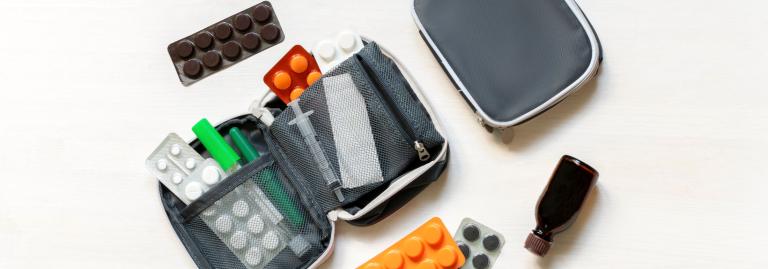
Flying with medication: What to expect at airport security
If you take medication regularly, travelling doesn’t change that — but it can raise a few practical questions before you head to the airport. Can you bring your prescriptions in your carry‑on? What about liquid medications, pill organizers, inhalers, or items that need to stay cold? And what exactly happens at security when you present them?
The good news is that you can bring the medications you need, and the screening process is designed to support travellers who rely on them. A little preparation — and knowing what to expect — can make your time at the checkpoint smoother and more predictable.
This guide gives you clear, simple steps to help you move through security with confidence, whether you’re travelling with prescription medications, over‑the‑counter medications, vitamins in your carry‑on, or medically necessary items like insulin or an EpiPen.
Bringing medications through the security checkpoint
You’re allowed to bring prescription and essential non‑prescription medications with you through security checkpoints. Keeping them in your carry‑on is recommended so they stay accessible throughout your trip — especially if you rely on them regularly or need them during the flight.
When you arrive at the checkpoint, simply let the screening officer know you’re travelling with medication. They may ask you to present them so they can be screened separately.
Quick tips
- Keep medications together in an easy‑to‑reach part of your bag
- Bring them in original packaging when possible (not required, but helpful)
- Let the officer know right away — it speeds things up
- Pill organizers and pill separators are allowed at airport security
Liquid medications at security
For liquid medication travel, the rules are straightforward. If a medication is something you need — whether it’s a prescription, an essential over‑the‑counter product, or a treatment you rely on regularly — it is not subject to the usual 100 ml liquid limit. You can bring the amount you need for your trip.
This applies to a wide range of medically necessary items, including common travel essentials like inhalers, insulin, distilled water for your CPAP, and emergency treatments such as an EpiPen. If you rely on a liquid medication for your health or comfort, you can keep it in your carry‑on.
Pack liquid medications so they’re easy to remove and present at the checkpoint when requested.
Solid medications made easy
Most solid medications — like tablets, capsules, and many vitamins — are simple to travel with. These items are not subject to volume limits, so you can pack what you need in your carry‑on.
The only exception is for inorganic powders or granular products.
Some medications and supplements come in powder or granular form, especially mineral‑based products such as calcium, magnesium, or iron. These inorganic powders are limited to a total of 350 ml in your carry‑on.
Quick tips
- Keep non‑essential powders under 350 ml/350 g in your carry‑on
- Pack extra quantities in checked baggage
Keeping things cool
When you rely on medication that needs to stay chilled, travelling may feel a bit more complicated, but it doesn’t have to be. With extra planning, keeping your medication at the right temperature is simple.
When can I bring ice or gel packs?
Ice packs and gel packs are allowed when they’re needed for:
- Refrigerating medication
- Treating an injury
- Other medically necessary purposes
This includes travellers who rely on:
- Insulin
- Biologics
- Temperature‑sensitive prescriptions
Many travellers also use a non‑electric insulated container, which is acceptable at screening.
Let the screening officer know you’re travelling with cold‑storage items so they can be screened quickly and appropriately.
Sterile-packaged medications just need extra care
If your medication comes in sterile packaging, you can absolutely bring it through security. A little communication helps ensure it stays protected.
Before screening begins, let the officer know that your medication is sterile‑packaged so they can handle it carefully. Packing these items in a clear, resealable bag makes them easy to present and helps protect the packaging during inspection.
Quick tips
- Use a clear resealable bag
- Tell the officer the items are sterile
- Keep them separate from other items in your bag
With a bit of preparation and an understanding of the rules for travelling with medication, you can move through Canada’s airport security screening with confidence.
What can I bring?
Does your item go in your carry-on or
checked baggage?
My CATSA Travel Checklist
Answer a few quick questions and get a personalized packing list that meets airport security rules.