
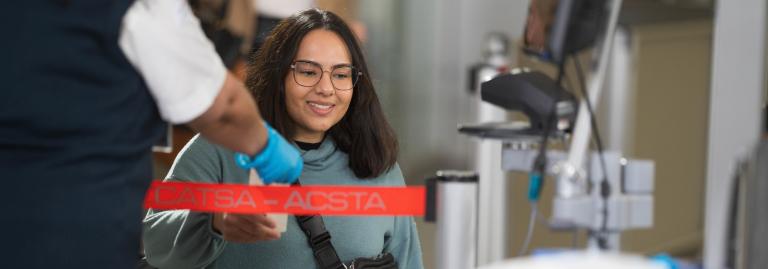
Travel opens the world to new places, new people, and new experiences. And for many travellers who use mobility aids or other assistive devices, that sense of freedom is just as important as the destination itself. With a little planning and a clear understanding of what to expect at security screening, your journey can be smooth, barrier‑free, and empowering from the moment you arrive at the airport.
Whether you’re recovering from an injury, managing a long‑term condition, or simply using a device that helps you move more comfortably, preparation is your best travel companion.
Start strong: Get support before you fly
Preparing for a flight can feel overwhelming, especially when mobility aids or accessibility needs are part of the equation. The good news is that support is available, and it starts long before you reach the security line.
Reach out to your airline early. Let them know if you’ll need help at check‑in, boarding, or during security screening. If you’re travelling with a companion, make sure they’re authorized to accompany you through the process.
Pro tip: Many airports offer a Family and Accessible Line at security screening. It’s a dedicated space designed for travellers who need extra time and support.
What to expect at the screening checkpoint
When you arrive at the checkpoint, you may see Facilitators in blue vests marked “Need Help/Besoin d’aide.” At Canada’s 16 busiest airports, these individuals are there specifically to support travellers who may need assistance. If you spot one, feel free to approach them, they’re there for you. If a Facilitator isn’t available, simply let a screening officer know that you need assistance or a bit more time. They can also expedite the process for you, your travel companion, and even your service animal or guide dog.
Once screening officers understand your needs, they’ll support you with clear instructions, help lifting your bags onto the conveyor belt if requested, and, when possible, screen you and your mobility aid together. If your device needs to be screened separately, it will be returned promptly.
Understanding your screening options
When you reach the front of the line, the screening officer will take a moment to understand what you need. This is your chance to tell them what feels comfortable for you. If walking through the metal detector isn’t possible, they’ll talk you through alternative options available to you. Together, you’ll decide on the option that best supports your mobility and comfort, whether that means bypassing the metal detector and being screened with a hand‑held device, having a full body scan, or choosing a physical search.
The checkpoint can feel busy and unfamiliar, but you’re not expected to navigate it alone. Every step of the process is designed with support in mind, and the people you meet along the way are there to help you move through security confidently, comfortably, and with your needs respected from start to finish.
Communication is key
The most important part of a smooth, barrier‑free security screening experience is communication. Tell screening officers what you need. Ask questions. Share concerns. The more information you provide, the better they can support you.
Security screening shouldn’t be a source of stress, especially when you rely on mobility aids or assistive devices. With clear communication, early planning, and an understanding of what to expect, you can move through the security with confidence and focus on what really matters: enjoying your journey.